
Socially transitioning in life
Socially transitioning in your day-to-day can mean more than just changing your name and pronouns. You may wish to also change your gender presentation and your online presence, and these will ultimately have widespread ramifications.
Changing your name and pronouns
Trans people often pick a new name after they transition. Some don’t, however, choosing to stick with their old names as they may feel comfortable with it.
This can be a process that can take years, or it can be a fairly quick process, depending on what one chooses to do, and whether they find it difficult to come out.
The hard part about changing your name is telling everyone about it.
Depending on how you feel about being known as your previous name, how many friends you’d like to tell, or how you want people to know, you may choose to deal with this in different ways.
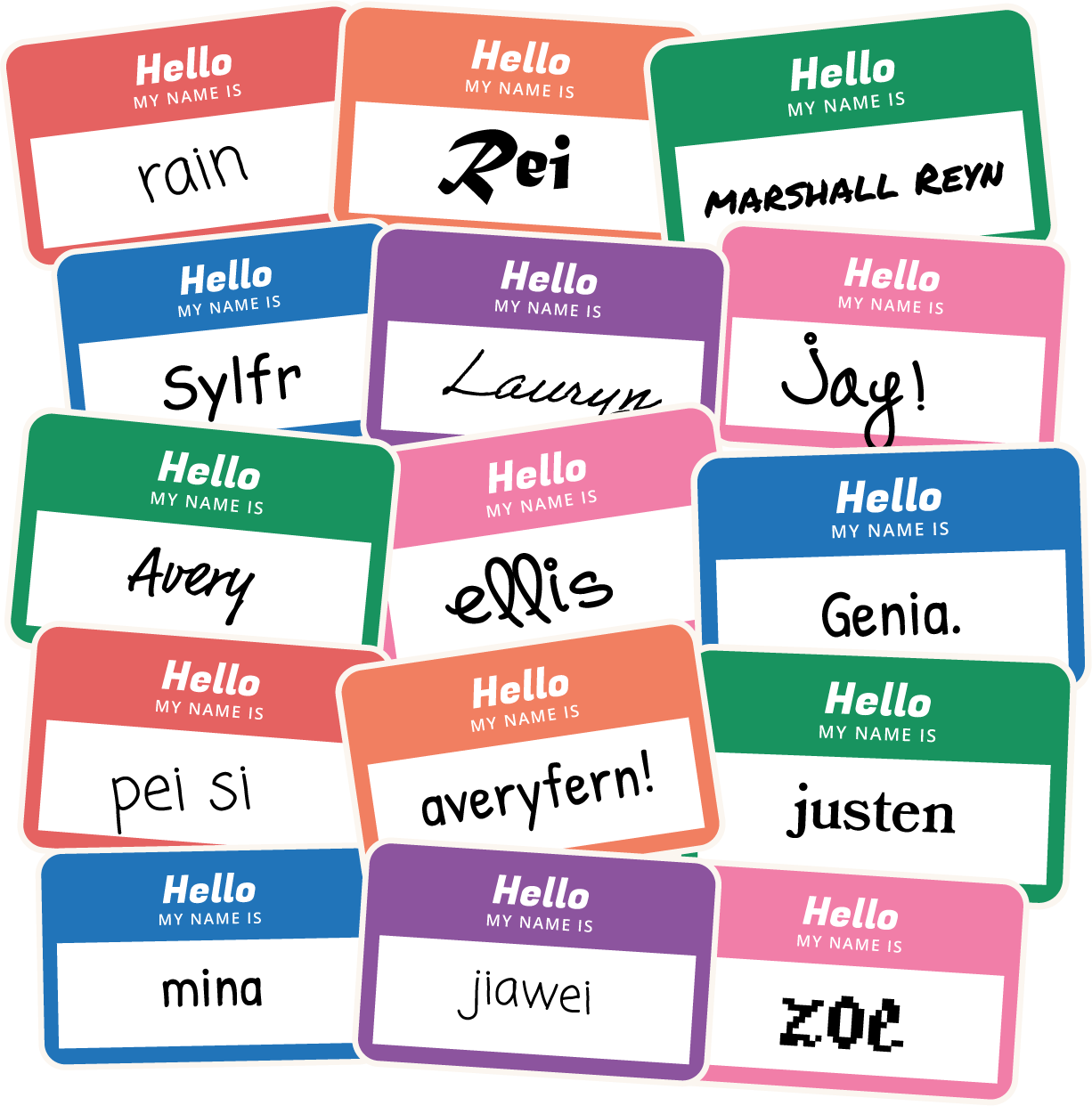
If your current name is something that doesn’t remotely resemble the name given to you at birth, it might be good to build new social media accounts and networks. This might not work if you depend on them for work, or for communicating with family members.
You do not need to be on HRT or even legally change your name before socially transitioning; a change of name is just that, a change!
You can try out new identities amongst friends or online spaces that are more accepting.
On pronouns
Many non-native English speakers in Singapore - even those fluent in English — have problems with gendered pronouns, since languages like Chinese, Malay and Tagalog use gender-neutral pronouns in speech.
Some may constantly use the wrong pronouns even when referring to cis people. They may thus find it difficult to remember to use the right pronouns for you, even if they accept your gender identity.
One upside to this is that Singaporeans are used to people who get pronouns wrong; being misgendered doesn’t necessarily mean you might be outed as trans.
If you know someone like this, and know that they do accept you, it can help to focus on that acceptance and other ways they affirm you as your gender, and brush off any wrong pronouns the same way you would when they misgender cis people.
Changing your presentation
There are several ways you can change your gender presentation as a trans person. These include aesthetic changes like facial hair removal or hairdressing services.
Hairstyles
It’s important to have a view of what you might want. If you need or want to be fluid in your presentation (to pass as your birth gender in certain situations), you can opt to have shorter hair, or a hairstyle that can at times pass as your birth gender.
A moodboard helps here. Here’s an example for short androgynous hair by a transfeminine person; having a moodboard means that you can communicate exactly what kind of hair you want and what you are comfortable with.
Shorter hair isn’t necessarily better if you’re seeking to be read as male, especially when you’re pre-transition, not transitioning, or early in your transition.
Short hair can emphasise feminine facial features and head shapes, and are likely more suitable for non-binary transmasc people aiming for a more androgynous look. Slightly long masculine styles may thus work better, but it is recommended that you have a more squarish or angular look rather than a rounded cut.
It is best for you to transition to a barber if you are read as male if you’re comfortable with it; you can reach out to us if you’re looking for trans-friendly barbers.
If you’re a transfeminine person, you should keep your hair as long as you can. This would mean giving your stylist enough material to work with.
You should have your hair trimmed periodically every three months or so, to ensure that it’s structured and textured in a way that you want to look when it grows out. For many people, transitioning from short to long hair would mean an awkward stage where your hair looks kind of flat. Let your stylist know if you’re intending to grow it out.
If you’re presenting as male, people around you will probably ask when you would cut your hair; if you’re relatively independent and not in school or National Service, just say you don’t have the time.

Hair removal
Trans women and transfeminine people often seek facial hair removal, and if you’re one of them, you can go to an affirming aesthetician for hair removal.
Though these services are available through the public health system, they are usually not eligible for subsidy and cost around $450 per session; public providers also tend to be inexperienced with treating trans patients.
Aestheticians in Singapore are able to provide electrolysis, IPL (intense pulsed light) and SHR (super hair removal) services.
Electrolysis | Permanent | Electrolysis is the only approved method of permanent hair removal.
A trained electrologist inserts a thin wire into the hair follicle under the surface of the skin, and an electric current destroys the hair root. This damage prevents hair from growing and causes existing hair to fall out.
You will have to permanently remove hair before certain gender-affirming surgeries such as vaginoplasty. |
IPL (intense pulsed light) | Temporary (long-term) | IPL stands for Intense Pulsed Light, a procedure where hair removal devices apply pulses of light to the hair root, forcing it to go into its resting phase. The hair you have then falls out, and gradually your body grows less hair in that area.
IPL is a temporary hair removal method that is fairly long term. |
SHR (super hair removal) | Temporary, but possibly permanent | SHR - or super hair removal - uses low-intensity pulses of light to inhibit hair growth. Some treatments include in-built cooling systems for comfort. |
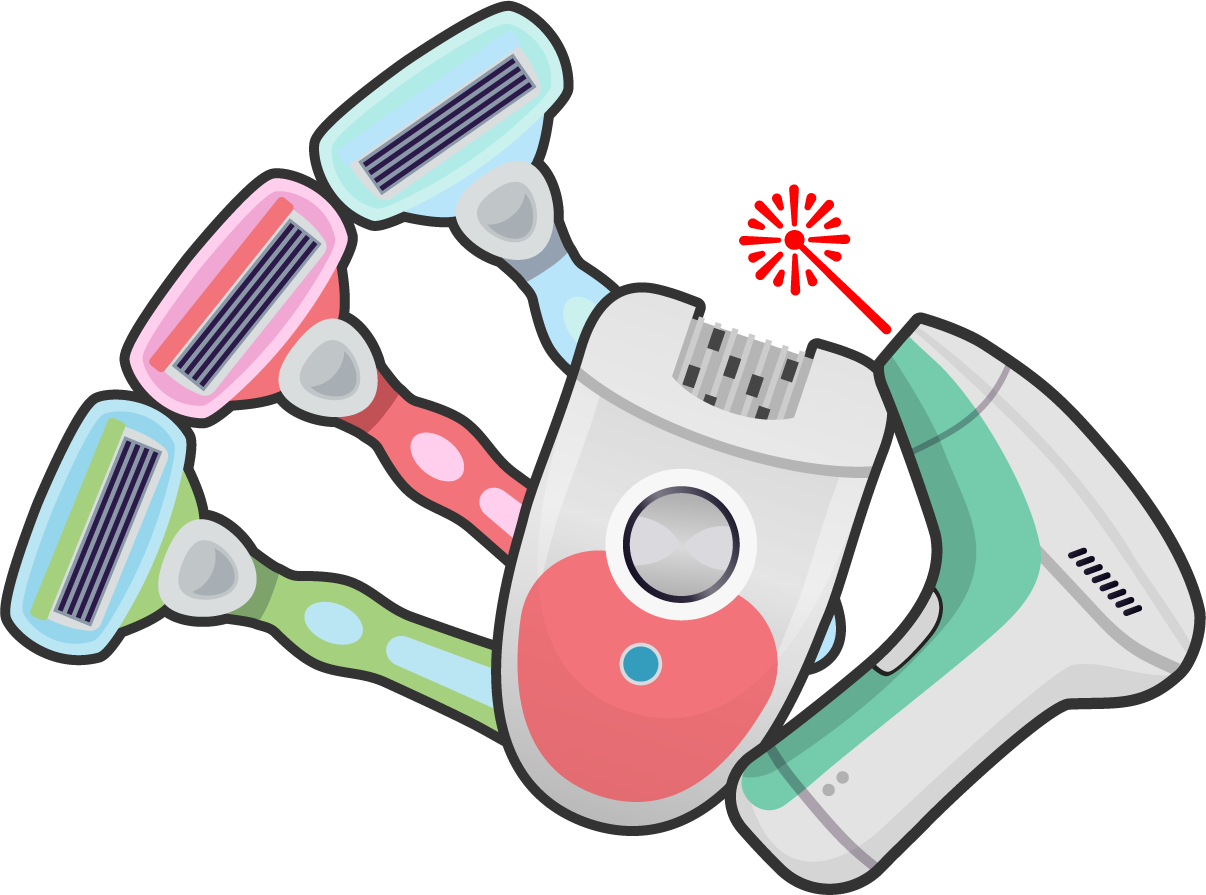
Aestheticians usually do not provide for laser hair removal as they require additional licensing.
For a trans-friendly provider, you can contact Alex and team at HairFreeSG.
If you are an aesthetician who welcomes trans clients and wishes to advertise this, let us know so we can add you to our directory.
Binding safely
Singapore is very hot and humid, and thus binding can seem like a daunting yet necessary task that people with breasts need to get through.
Binding should not hurt, cut your skin, or prevent you from breathing. Do not buy a binder that is one size too small in the hopes that it will flatten your chest — binders are already designed to be very tight when they fit properly, and getting one that’s too small will cause severe discomfort and injury.
As a rule of thumb, do not spend more than 8 hours binding. Let your body get used to the binder slowly — spend two hours first, then four, then six — and remember to take breaks. Some people might be able to handle wearing a binder for very long, while others can’t make it to 8 hours — it is highly dependent on your body!
Don’t wear a binder while doing strenuous activity, or doing anything that requires a lot of lung effort, as you’re basically compressing your lungs. Do not wear them while choir singing, playing a wind instrument, or when sick with a respiratory illness; you’ll get out of breath, and it will be difficult to catch your breath.
Some of these binders may not work entirely in our weather, especially if you sweat easily.
Sports bras
Some people may find a tight-fitting compression sports bra to be sufficient.
Others wear more than one for a stronger binding effect.
Compression sports bras have the added benefit of supporting breasts so they don’t sag over time, but the binding effect may not be as strong.
Specifically designed binders
It’s important to get yourself measured before getting a specifically designed binder; most binder companies provide a guide to sizing, but if you don’t see one or can only find a size chart, a good way of finding out what size you should get is to measure your chest size (underbust) and shoulder width.
Body tapes
Various brands of self-adhesive body tapes (e.g. TransTape, Risque.) can be used to tape down your chest and contour your body in a gentle yet firm way.
Some brands offer specific varieties for chest binding and taping, including options that are backless, elastic, waterproof, latex-free, and use medical grade adhesives. These can reduce skin irritation and increase comfort.
Compression shirts
Tight-fitting compression shirts are usually made from Spandex, Lycra or other similarly stretchy material.
Compression shirts are designed to aid in muscle recovery and have excellent moisture-wicking properties.
Some brands like Under Armour make compression gear for athletes.
Look for items in the “heat gear” category, as they are designed to be breathable and might be more comfortable in our climate.
Layering shirts
Wearing a tight-fitting undershirt or sports bra as a bottom layer and then a loose T-shirt followed by a loose hoodie or button-down shirt can help hide some aspects of your body, like wider hips and narrow shoulders, and reinforce your gender presentation.
In our warm and humid weather, wearing too many layers can be uncomfortable. You can try getting breathable and moisture-wicking fabrics to combat this, or keep this option for cooler weather or days when you will be in air-conditioned settings.

Going to the washroom
At some point in your transition you may have to switch the public restrooms you use. Singapore presently does not have any specific laws about sex-specific usage of public restrooms, but you may have to deal with other people’s reactions.
The safest option for most, especially if you are perceived as androgynous or ambiguous, or if you are genderfluid, is a unisex or handicapped stall. Some public buildings in Singapore have handicapped stalls inside the two gendered restrooms, so you may have to take note of that.
As a general rule, you are much more likely to be stared at or confronted in the ladies, but seriously hurt in the gents if people figure out that you are trans and respond badly.
Whichever toilet you choose, act like you belong there, and people will assume you do.
After all, you’re there for a fairly simple and normal objective — to relieve yourself — and there’s no need to feel guilt or fear over not belonging there.
Go in, use the toilet, wash your hands, and leave. You’re less likely to be seen as suspicious if you look like you belong there, as opposed to if you’re visibly nervous and scared.
Remember that even with a small trans community, Singapore is still a very diverse place when it comes to gender presentation.
Masculine/butch cis women still use the ladies, and feminine-looking cis men still use the gents! You might just look like someone who is gender non-conforming, and that is relatively acceptable in society today.
More tips if you don’t feel confident
Dealing with pre-transition photos on social media networks
If you wish to keep your transition private, it would be helpful for you to delete all instances of pre-transition photos on social media networks.
If you would like to store them, a good place would be offline on a hard disk or thumb drive or on your phone, as long as you have appropriate privacy safeguards.
This is to largely prevent people from outing you or knowing outside your control.
It gets easy to find previous photos of yourself, especially if your younger self or if your relatives were more loose with their social media privacy.
You should do the above before you come out in public.
Most social media instances will have a function to download the information you have put up and to delete it from servers.
Social media safety
At some point in your social transition, you will have to try and figure out who you’re comfortable with coming out to.
We generally encourage trans folk to connect with the people closest to them.
But if there are some people who make you feel unsafe, or if you are not ready to come out to some people, you can opt to block or disconnect.
Socially transitioning at work
Depending on where you’re at in your career, you may have to deal with many different things when you socially transition.
Transitioning early will have obvious benefits of enabling a professional network and a career without the messiness of transition. But it may also mean some difficulty in obtaining a job, especially if you are not able to legally change your gender.

Socially transitioning in school
School systems generally vary in how they accept trans and queer students, and some school systems may allow you to socially transition without changing your name.
MOE policy has generally been one of not affirming transition or visible queerness, especially in secondary schools and junior colleges.
However, they have recognised it as a complex issue that they will work with parents on a case to case basis.
Still, some junior colleges and polytechnics may be more welcoming (culturally) than others, with people accepting your chosen name and pronouns.
You can read more about navigating the school system while being transgender here.