Introduction to feminising hormone therapy
If you wish to pursue HRT, you should consult a qualified healthcare professional. HRT is safe when done under proper medical supervision, with regular blood testing to ensure that everything is fine. If cost is a concern, consider going to the public healthcare system rather than seeing a private doctor.
We strongly caution against obtaining hormones through the black market, due to the high potential for dangerous side effects. Sources may be severely watered down and consist primarily of oil, or may be mixed or laced with toxic substances like mercury that could cause serious damage to your body.
In other cases, consistency may be an issue, where what seems like the same dosage may end up introducing wildly different levels of hormones into your body.
A person’s hormonal profile is dependent on the gonads they were born with; as most people undergoing transfeminine hormone therapy have testes, the clinical goal of the treatment would be to decrease or eliminate the effects of testosterone (T) and dihydrotestosterone (DHT) and increase the level of estrogen in the body so that its feminising effects may take place.
The major forms of feminising hormones in the body are estrogens (primarily estradiol, also known as E2 or E) and progestogens (mainly progesterone, also known as P4 or P). Both of them are responsible for and determine the body’s secondary sex characteristics, much like T in men.
Estrogens
Estrogens are the chief sex hormone used in transfeminine hormone therapy.
They cause feminisation, which includes breast development, a softening of the skin, a feminine pattern of fat distribution, a widening of the hips, and other physical changes.
Progestogens
Progestogens have no known role in physical feminisation, but perform important functions in the female reproductive system and are essential hormones during pregnancy.
Some believe, based on anecdotal evidence, that progestogens have an effect on sexual desire and function in patients undergoing transfeminine HRT, though this has not been well proven.
Anti-androgens
Anti-androgens (AA) are medicines that reduce or block the effects of androgens like T and DHT.
In the context of transfeminine HRT, they are typically prescribed to pre-operational or non-operational patients to suppress endogenous androgen production. AA is not required for post-operative patients who have had their gonads removed.
Sex hormones also affect the brain, influencing cognition, emotions and behaviour. Androgens and estrogens both play roles in regulating sexual desire and arousal.
Obtaining feminising hormone therapy in Singapore
Your doctor will assess your suitability for hormone therapy and discuss the risks and benefits of treatment.
You should first be given baseline laboratory blood tests to determine if you have any concurrent medical issues that may affect your suitability for HRT or your dosage level.
This also allows your doctor to know if any future medical concerns are due to HRT or pre-existing conditions.
These tests should be repeated regularly after treatment is initiated to ensure that everything is going fine, after which the frequency can be decreased to about once a year.
Some doctors will recommend starting on a low dose and gradually ramping up to normal dosage levels so as to give your body time to adapt.
Take a look here for more information on how to obtain gender-affirming hormone treatment in Singapore.
Types of transfeminine hormone therapy in Singapore
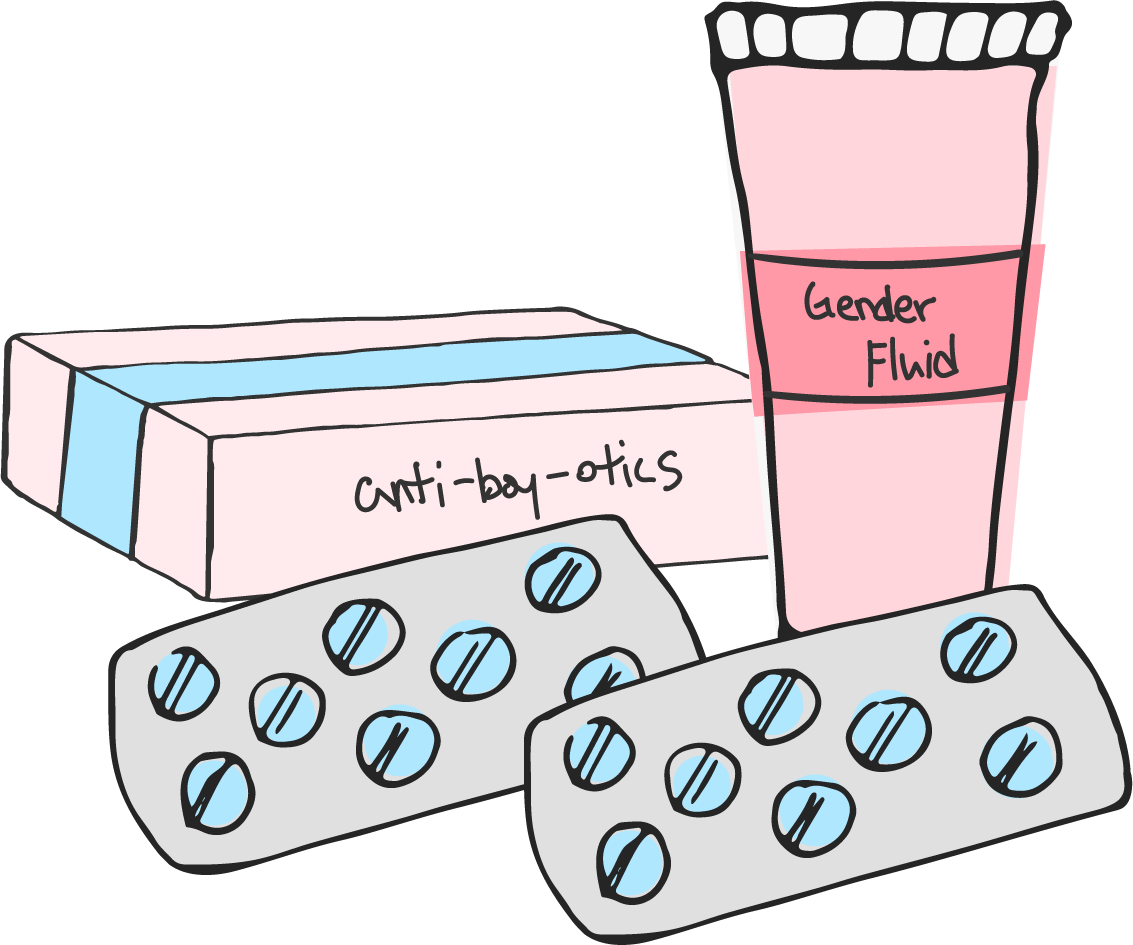
With the exception of injectables, many routes are available for the administration of estrogen, progesterone and anti-androgens.
Estrogen has several modes of administration, like oral and sublingual pills, as well as transdermal patches and gels.
Additionally, there are three types of anti-androgen, all with various side effects.
Speak with a qualified healthcare professional on what is the best mode of administration for you.
Type | Brand name | Biochemical name | Route of Administration |
Estrogen | Estrofem (1mg/2mg) | Estradiol Hemihydrate | Oral/Sublingual |
Estrogen | Progynova | Estradiol Valerate | Oral/Sublingual |
Estrogen | Climara | Estradiol Patches | Transdermal |
Estrogen | Estradot | Estradiol Patches | Transdermal |
Estrogen | Estramon | Estradiol Patches | Transdermal |
Estrogen | Oestrogel | Estradiol Gel | Transdermal |
Anti-androgen | Androcur | Cyproterone acetate (CPA) | Oral |
Anti-androgen | Casodex | Bicalutamide | Oral |
Anti-androgen | Aldactone | Spironoactone | Oral |
Anti-androgen | Spirolon (25mg) | Spironoactone (Spiro) | Oral |
Progesterone | Oral micronised progesterone | Oral/rectal |
Expected changes from transfeminine hormone therapy
Every person’s body is ultimately different, and expected changes will likely vary significantly between individuals due to factors like genetics, diet and hormone levels as well as HRT regimen and at what age HRT began.
Effects of feminising HRT
Side effects from feminising HRT

Effect | Onset | Completion | Permanency |
Breast development | 2–6 months | 2–3 years | Permanent |
Reduced and slowed growth of facial and body hair | 3–12 months | >3 years | Reversible |
Cessation and reversal of scalp hair loss | 1–3 months | 1–2 years | Reversible |
Softening of skin and decreased skin oiliness and acne | 3–6 months | Unknown | Reversible |
Redistribution of body fat in a feminine pattern | 3–6 months | 2–5 years | Reversible |
Decreased muscle mass and strength | 3–6 months | 1–2 years | Reversible |
Widening and rounding of the pelvis | Unknown | Unknown | Permanent |
Changes in mood, emotionality, and behaviour | Immediate | Unknown | Reversible |
Decreased sex drive and spontaneous erections | 1–3 months | 3–6 months | Reversible |
Erectile dysfunction and decreased ejaculate volume | 1–3 months | Variable | Reversible |
Decreased sperm production and infertility | Unknown | >3 years | Mixed |
Decreased testicular volume | 3–6 months | 2–3 years | Unknown |
Voice changes (e.g., decreased pitch/resonance) | None | N/A | N/A |
Height changes (e.g., decrease) | None | N/A | N/A |
Some effects of a previous masculine puberty cannot be reversed with transfeminine hormone therapy; while facial and body hair can be thinned through transfeminine hormone therapy, permanent removal of facial hair can only occur with laser hair removal and electrolysis.
Skeletal changes — such as widening and rounding of the pelvis or height changes — may not occur after a person’s growth plates close during puberty.
Other effects of a masculine puberty may also be very difficult to reverse without surgical interventions, such as:
While T may induce a lower vocal pitch in transmasculine HRT patients, E does not have the reverse effect. Voice changes can only be achieved with speech therapy and voice training or surgery.
Notes on fertility
HRT may result in infertility — but it does not act as a form of contraception and you should take all necessary precautions.
There is a very small possibility that you may get a person with a uterus pregnant even when on estrogen; take all necessary precautions. A good rule of thumb would be to assume you can have children unless you have had a vasectomy or orchiectomy.
Loss of fertility may or may not be reversible upon cessation of HRT, depending partly on how long it has been. Some trans people thus choose to bank their sperm or eggs prior to undergoing HRT. Others temporarily pause HRT while they attempt to have a child, with success varying on a case-to-case basis.
Trans women may have to stop HRT for several months in order to attempt to bank their sperm.