
Social transition
Before considering medical transition, it may be helpful for you to experiment with your gender expression to figure out what is most comfortable for you.
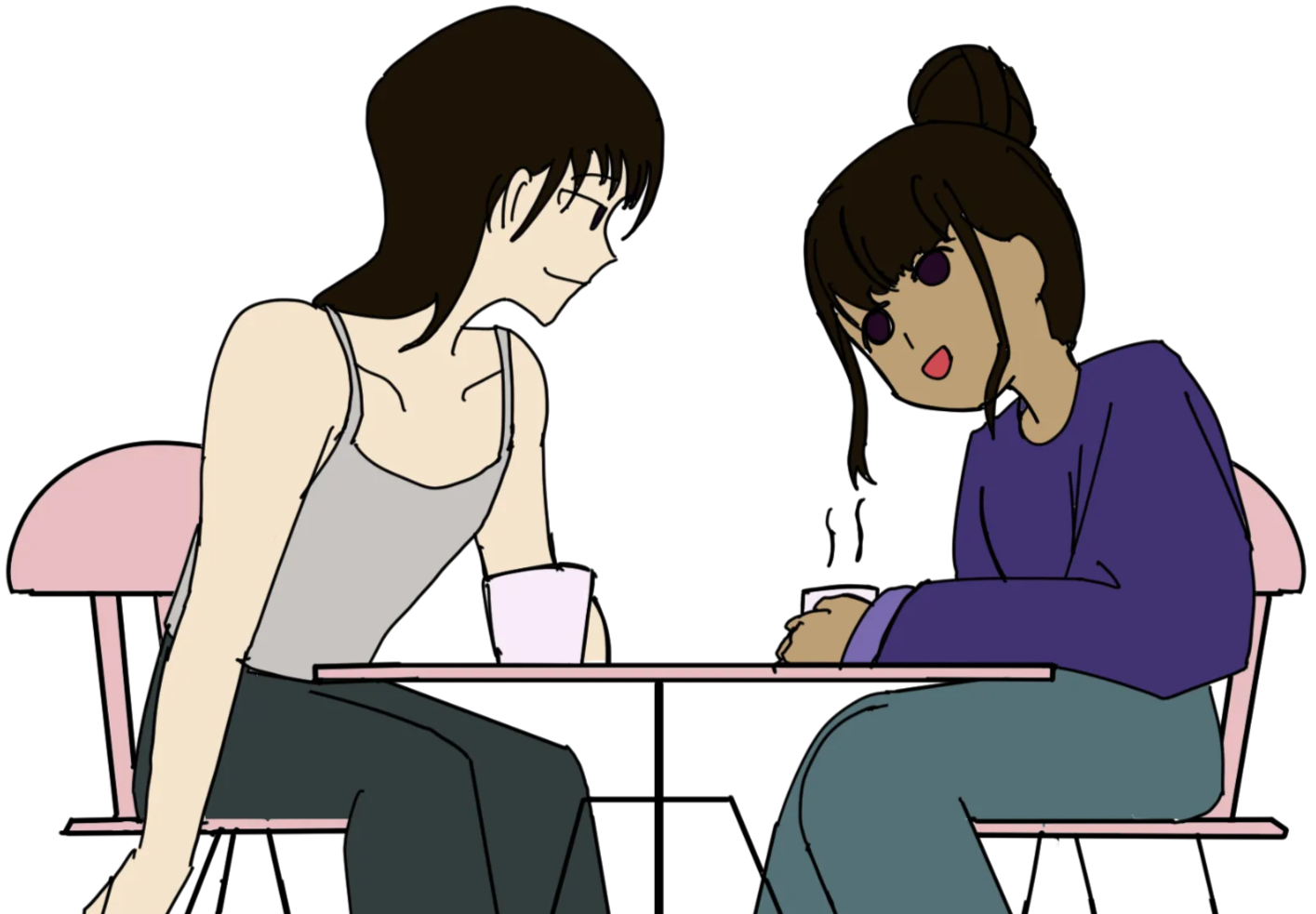
Above all else, find your community.
Sharing ideas and experiences with others can help you find out what works for them and see if it might also apply to you.
In the hot and humid climate of Singapore, chest binding might seem like a daunting and yet necessary task for many non-binary people.
Binding should not hurt, cut your skin or prevent you from breathing. Do not buy a binder that is one size too small in the hopes that it will flatten your chest. Binders are already designed to be very tight when they fit properly, and getting one too small will be very uncomfortable and risk injury.
Let your body slowly get used to the binder. Start with binding for one or two hours, then four, then six, and remember to take breaks. As a rule of thumb, you should not bind for more than eight hours a day. You may find it difficult to even make it that long, as it is highly dependent on your body!
If you are expecting top growth from transfeminine HRT, you should not spend an excessive amount of time binding. Binding may change the shape of your breast tissue, and binding for a long time (months or years) may change it substantially, causing your breasts to become flatter and less firm. This may not be ideal (unless that’s what you want).
Naturally, do not wear a binder while doing strenuous activity or anything that requires a lot of lung effort. Binding compresses your lungs and may cause respiratory difficulties. Do not wear a binder while choir singing, playing a wind instrument, or when sick with a respiratory illness; you will get out of breath easily and it may adversely affect your health.
Types of binders
Some of these binders may not work entirely in our weather, especially if you sweat easily.
Sports bras
Some people may find a tight-fitting compression sports bra to be sufficient.
Others wear more than one for a stronger binding effect.
Compression sports bras have the added benefit of supporting breasts so they don’t sag over time, but the binding effect may not be as strong.
Specifically designed binders
It’s important to get yourself measured before getting a specifically designed binder; most binder companies provide a guide to sizing, but if you don’t see one or can only find a size chart, a good way of finding out what size you should get is to measure your chest size (underbust) and shoulder width.
Body tapes
Various brands of self-adhesive body tapes (e.g. TransTape, Risque.) can be used to tape down your chest and contour your body in a gentle yet firm way.
Some brands offer specific varieties for chest binding and taping, including options that are backless, elastic, waterproof, latex-free, and use medical grade adhesives. These can reduce skin irritation and increase comfort.
Athletic compression shirts
Tight-fitting compression shirts are usually made from Spandex, Lycra or other similarly stretchy material.
Compression shirts are designed to aid in muscle recovery and have excellent moisture-wicking properties.
Some brands like Under Armour make compression gear for athletes.
Look for items in the “heat gear” category, as they are designed to be breathable and might be more comfortable in our climate.
Layering shirts
Wearing a tight-fitting undershirt or sports bra as a bottom layer and then a loose T-shirt followed by a loose hoodie or button-down shirt can help hide some aspects of your body, like wider hips and narrow shoulders, and reinforce your gender presentation.
In our warm and humid weather, wearing too many layers can be uncomfortable. You can try getting breathable and moisture-wicking fabrics to combat this, or keep this option for cooler weather or days when you will be in air-conditioned settings.

Similar to binding, wearing shoulder pads for a broader appearance or using a packer can help you feel and look more masculine.
Packing refers to using a device to create a bulge and achieve the look (and feel) of having a penis. As with many gender-affirming practices, packers can be used by cisgender men too, but are commonly used by trans men and non-binary and gender non-conforming people to ease gender dysphoria or create gender euphoria. Packers come in multiple shapes and sizes. Anything can be used as a packer, including rolled up socks, or medical grade or aesthetic-purpose prosthetics that can be worn with the aid of packing undergarments.
Wearing a packer is a personal choice. Not wearing a packer and does not impact the validity of one’s gender identity. Some people may find it worsens gender dysphoria by reminding them of what they do not naturally have.
Packers include soft packers, hard packers (or pack-and-play prosthetics), stand-to-pee devices, and 3-in-1 packers that can be used for packing, sex, and urinating (”pack, play and pee”).
Available in various online stores, these can range anywhere from $10 to $100, and come in a variety of colours, sizes and materials, with circumcised or uncircumsised variations. They can be held in place with a jockstrap, harness, or boxers (with safety pins for added security). More information can be found here.
For transfeminine people, gently pushing the testes up into the inguinal canals or to the sides and tucking the penis and scrotum in between the legs will help to flatten the crotch area. This may help you feel more comfortable, look better in certain clothes, or otherwise alleviate dysphoria. Tight underwear will help maintain the tuck, though you may also opt for specialised underwear known as gaffs that are available and specifically designed for tucking.
The process of tucking should not hurt or feel uncomfortable; if at any point tucking becomes painful or feels bad, it is best to stop, take a break and try again afterwards.
Do not use tape to tuck. This may cause pain and injury, and will also make it more challenging to urinate as you have to undo and redo the tuck each time. If you have to use tape, opt for medical tape specifically intended for use on the human body.
Bear in mind that transition isn’t all about changing or enhancing aspects of your physical body. After all, gender is seen, defined and shaped by countless things, from your appearance, to your behaviour and much more. It all depends on what you feel is most right and authentic for yourself.
So, if you’re not entirely sure, continue to explore and discover. Adopt different names and pronouns with a supportive circle of people. Try on new clothes and outfits. And most importantly, be yourself!
Medically transitioning as a non-binary person
Medical transition masculinises or feminises your body to better align it with your gender identity.
Some non-binary people experience binary gender dysphoria around their bodies and may wish to pursue a “regular” trans male or trans female medical transition.
Others experience dysphoria over some characteristics but not others, or would be more comfortable with a more androgynous appearance.
Yet others experience no or minimal dysphoria around their bodies, but may still wish to pursue medical transition to change how others perceive their gender.
Transmasculine non-binary medical transition
Non-binary transmasculine transition with the goal of partial masculinisation is largely centered around microdosing testosterone, and possibly also getting top surgery.
Testosterone is the chief sex hormone driving masculinisation in transmasculine hormone replacement therapy (HRT). It has several delivery methods and formulations. In Singapore, the most common are Depo-T (testosterone cypionate, via injection), Nebido (testosterone undecanoate, via injection), Sustanon (a combination of testosterone esters, via injection) and Androgel (via application onto skin).
You can have a psychiatrist write a memo stating that you are a non-binary transmasculine person who wishes to go on a low dose of testosterone. Consult your endocrinologist to ensure you understand what treatment entails and to check for any potential health risks based on your personal medical history.
As with many aspects of medical transitioning, it is important that your HRT is closely monitored by an endocrinologist.
For more on the effects of testosterone, take a look at the transmasculine guide to HRT.
Regularly check in with yourself on how you feel about the effects of HRT, especially during the early days. It may also help to talk to others in the community.
Top surgery — or double mastectomy — is a surgical procedure to remove your breasts. Many non-binary people wish to have an androgynous body, and top surgery may be part of that goal.
For transmasculine people, most surgeons require you to have been undergoing masculinising HRT for at least a year before approving you for top surgery. Testosterone causes changes in body fat, such that going on T after surgery could change how the results look. Some surgeons also want to ensure that you are serious about transition and not acting on impulse.
Others do not have any HRT requirements, or may make waivers for non-binary people.
If you are above 21, do not have plans to go on testosterone, are clear about your transition goals and have been living as a non-binary person for a while, an understanding psychiatrist might be able to write a referral explaining that.
Available top surgery options depend on the size of your chest and other medical concerns. Do research and consult with your surgeon beforehand on what will be possible for you. As top surgery is largely irreversible and comes with medical risks, you should be very sure on what you want before going ahead.
You can also ask your surgeon for before and after photos of their previous patients to see if you like their results. Some hospitals make their photos publicly available online. You can also request in person to see your surgeon’s portfolio.
Reducing breast size is an option if you do not wish to be completely flat.
Whether this is possible would be dependent on the size of your breasts. A reduction would be difficult if your breasts are deemed too small. Doctors typically conduct breast reductions only when they cause back pain and other health concerns, or when it is supported with a diagnosis of gender dysphoria.
Depending on the size of your breasts, you may need to return post-procedure to have fat placed back into your chest if you’re going for a reduction; this is largely because if you have large breasts, your skin won’t be able to hold much weight when the breast tissue is removed.
Transfeminine non-binary medical transition
In contrast to transmasculine non-binary transition, transfeminine non-binary transitions focus on demasculinising your body to your preferred degree.

To start off, a low dose of estrogen and an appropriate low dose of anti-androgen (AA) to lower testosterone helps in demasculinisation and will allow for some feminisation.
You can’t predict what will happen to your body or choose what effects HRT can give you. For example, while most transfeminine people report slower or reduced breast growth in comparison to cisgender women, with less growth expected at reduced doses, certain AAs, like cyproterone, may help to promote more breast growth.
Additionally, operating at low levels of testosterone and estrogen may mean experiencing some degree of lethargy.
While the impacts of low-dose transfeminine HRT on fertility are as yet unknown, some non-binary transition options may allow you to retain libido and sexual function; other options like the application of a small dose of testosterone may help retain the sexual function of your genitals.


Selective estrogen receptor modifiers (SERMs) are used to prevent breast development. The most common SERM used in this case is raloxifene.
In simple terms, these compounds have a feminising effect in certain parts of the body while being non-feminising in others. Raloxifene is chiefly non-feminising in breast and reproductive tissue while being feminising in most other parts, like with skin and most tissue. As such, it can be a suitable tool to help you achieve your goals for transition.
Potential side effects of Raloxifene include hot flashes, fat redistribution around the upper and lower abdomen, and bone density changes that can be mitigated with a low dose of estrogen.
Additionally, if you have testes and are not using an appropriate anti-androgen, SERMs will greatly increase your testosterone levels. Bicalutamide is not recommended when using raloxifene because it is a competitive antagonist of the androgen receptor, and might cause your testosterone levels to become too high for bicalutamide to block.
The effects of SERMs, estrogen and anti-androgens are partly contingent on how you feel about its feminising or demasculinising effects on your body.
Reflect on how you feel about the changes as you work towards your transition goals. It may help to bring some clarity as to whether you want a binary transfeminine transition or if you wish to continue with a non-binary hormone regime.
What happens if I change my mind?
Fluctuations in gender identity can happen, especially for people who identify primarily as genderfluid, while most people — even cis people — experience changes in their gender expression over time. It is not abnormal for cis men to have tried out a more feminine presentation, such as long hair, or for cis women to have gone through a tomboy phase.
The same thing occurs for many trans and non-binary people. Each person’s gender expression and how they think about their gender identity is shaped by the diverse and unique social, family and community contexts they experience.
That being said, some aspects of medical transition are irreversible. Most irreversible effects can be reversed either through surgery or treatment.
It is okay if you realise that something is not working for you, or if you no longer feel the same about your gender as you used to.
Stepping off hormones
If you choose to pursue low-dose HRT as part of you non-binary gender transition, it is important to be aware that suddenly ceasing or stopping treatment can lead to severe health effects.
Suddenly stopping transfeminine HRT can feel like severe menopause, while suddenly stopping transmasculine HRT can lead to headaches, anxiety, muscle loss and depression.
Many of these symptoms can be managed through a healthcare provider who will slowly reduce your hormonal dose. It is highly recommended that you do so.
Effect | Permanency |
Breast development | Permanent/Reversible only through surgery
At a low dose of estrogen, breast development may be slow and not discernable within the first few months. |
Softening of skin and decreased skin oiliness and acne | Reversible |
Redistribution of body fat in a feminine pattern | Reversible |
Decreased muscle mass and strength | Reversible |
Decreased sex drive and spontaneous erections | Reversible |
Erectile dysfunction and decreased ejaculate volume | Reversible |
Decreased sperm production and infertility | Mixed results. One may require fertility treatment |
Decreased testicular volume | Unknown |
Most of these effects will take longer with a low dose.
Effect | Permanency |
Increased muscle mass and strength | Reversible |
Redistribution of body fat in a masculine pattern | Reversible |
Cessation of menstrual cycle | Reversible if uterus not removed |
Increased skin oiliness, rougher texture or acne | Reversible |
Body scent | May change |
Increased sex drive | Reversible |
Voice deepening | Permanent, reversible only through speech therapy or voice training |
Increase in facial and body hair | Texture or growth of hair may change, but hair that has developed will not disappear. |
Clitoral growth | Permanent; clitoral size will not shrink |
Hair loss (male pattern baldness) | Head hair loss is mostly irreversible, but may see improvements after going off T |